Pages

Showing posts with label Science. Show all posts

Thursday, 24 June 2021

Topic 5 - Flower Power


My learning goal and outcome 


  1. Know the parts of the flower and what the function (what they do and why) of each part

  2. Be able too dissect a flower, arrange its parts and collate on an information sheet

  3. Complete a scientific diagram of a flower 

  4. Be able too speak above 


My thoughts about flowers, What have you notice about flowers, What do you know about flowers

  • Their look nice

  • I notice the colour of the flower

  • Flowers get their food from the sunlight 


Hibiscus Flower

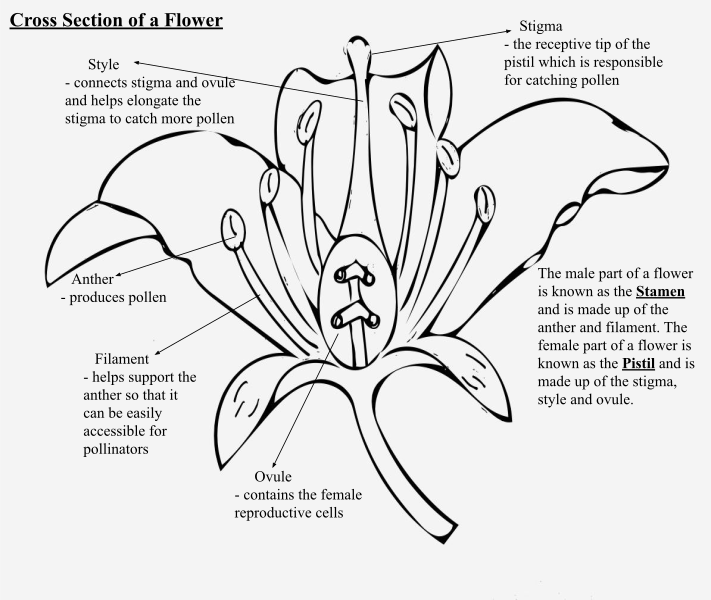
  • Stigma

  • Style

  • Anther

  • Pollen tube

  • Sepal 

  • Thalamus 

  • Male gametophyte 

  • Petal 

  • Ovule 

  • Female gametophyte 


Equipment 

  • Cutting tool

  • Flower 

  • Cutting board 

  • Petals 

  • Flower bud 


What to do

  • Remove one petal 

  • Remove one sepal 

  • Carefully pinch the sides

  • Cut on center of line 

  • Remove the style 


Hello everyone so for this week tech lesson we cut out the pollen tube out of a Hibiscus flower. Thank you for looking at my blog bye!

Tuesday, 22 June 2021

Topic 4 - Floating and Sinking

 Floating or Sinking - Buoyancy Experiments:

Aim/purpose: Find out what is positively buoyant (can float) and negatively buoyant, (cannot float), and to predict what the outcome of one object will be.


Definitions:

Float - On the surface of liquid, (most of the time, water)


Sink - Can not float and object goes under the liquid.


Semi-float - Where something can float but half of it is in the liquid, (between floating and sinking).


How something floats: It has enough air and isn’t too heavy.


How something sinks: Where something doesn’t have enough air, is heavy and dense; Thus, the object sinks.


Buoyant - The term for something that can float.


Negatively buoyant: Term for something that can’t float.


Positively buoyant: Term for something that can float.


Recording our buoyancy testing

Predicting what the outcome may be and if our predictions are proven wrong or correct.


Name of object


Size - cms L-W-D or diameter

Weight : gms

Composition

(what it’s made of)

Prediction

Float or sink

Buoyancy result

Golf ball

12.7cm

45.76gms

Plastic stuffed with rubber

It won’t float. It seems a bit too heavy.

It didn’t float, (correct)!

Tennis ball

21.1cm

54.40gms

Hollow inside, fabric outside.

Semi float.

It semi -floated, (correct)!

Ping pong ball

12.4cm

2.29gms

Plastic, inside is hallow.

Float.

It floated, (correct)!

Small marble

5.7cm

5.33gms

Glass

Float

It didn’t float, it sinked, (incorrect)!

Big marble

9.4cm

20.43gms

Glass

Sink

It sinked, (correct)!

Big lego 

3.7cm

8.33gms

Plastic

Float

Floats/semi-floated, (correct)!

Small block

1cm

0.50gms

Wood

Float

Float/semi-floated, (correct)!

Medium block

1.9cm

3.80gms

Wood

Semi-float

Semi-floated, (correct)!

Long block

10cm

19.41gms

Wood

Semi-float

Semi-floated, (correct)!


Wide block

14.1cm

116.43gms

Wood

Sink

Semi float, (incorrect)!

Styrofoam

3.2cm

0.15

Styrofoam

Float

Floats, (correct)!

Hello everyone this is what we did at tech last week, we put some objects into a bucket of water and we have to predict if it would float or sink. Thank you for looking at my blog bye! 

Friday, 11 June 2021

Topic-1 Science Introduction


Hello everyone so this blog post is about what I did on the first day at tech for our new groups. All we did was write good rules for us. Thank you for looking on my blog and please leave a positive comment.


Science Introduction 

Participate 

-Too take part

-Get involved 

-Do it


Team work

-Everyone has their part

- No boss


One talker at a time


Respond, Contribute


Collaborate 


Be responsible 

     - Care for equipment

-Tidy up

-Follow instructions 


Listen

Contribute

Share


Thursday, 10 June 2021

Topic 3 - Trying out laboratory equipment

Hello everyone this is what we did at Tamaki Collage for Science. We used Lab equipment.   


 Aim or Purpose: 1. Measure an exact amount of sugar and dissolve in water to make a solution. 


  1. Thermometer

  2. Weighing Machine

  3. Stop Watch

  4. Spatula

  5. Pipette  


Method: We placed a petri dish on the weighing machines or scales. We used a spatula to measure the sugar. We put the sugar into a 200ml beaker fulled with water and then timed it to see how long it would take. Then we did hot water. We did that until the the sugar dissolved. We used a thermometer to see the temp of the water. We used 10grams of sugar and 100ml of cold and hot water. 


Results:  Temp of cold water = 23

Temp of hot water = 80

Time taken by water to dissolve in cold water = 1.20

Time taken by water to dissolve in hot water = 16


Monday, 22 July 2019

Something In the water


Something in the water is this terms theme. I would like to learn about the deep side of the sea and what lives in the underground caves. I hope you get to learn things from my blog about this term.